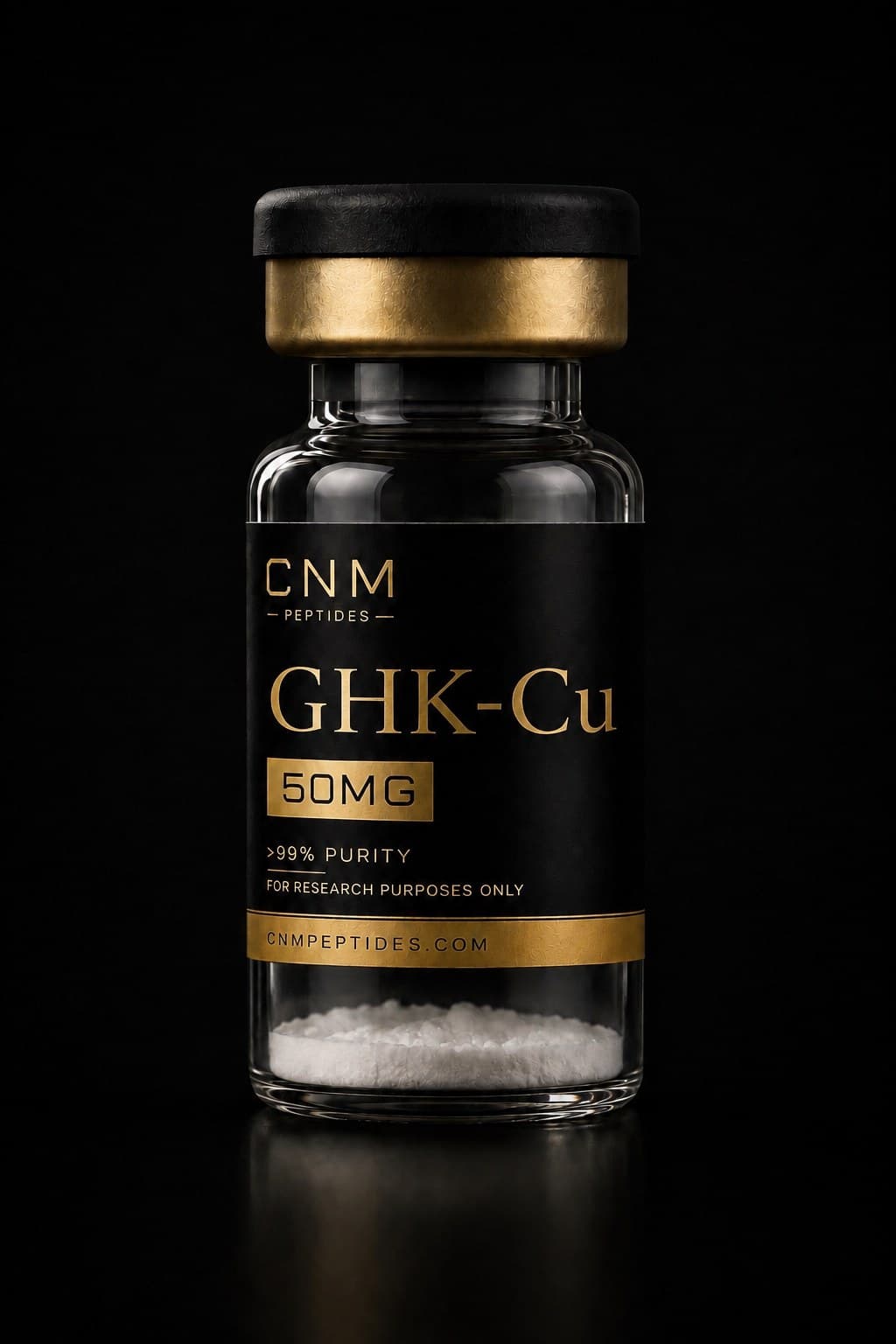
Copper tripeptide-1
GHK-Cu
The collagen signal.
A copper-binding tripeptide with substantial dermatological research behind collagen synthesis, elasticity and wound healing.
Dose
- Third-party tested
- Discreet packaging
- Tracked shipping
- Answered by a person
What this actually is
Before you decide, understand it.
Mechanism
Binds copper ions and signals fibroblasts to increase collagen, elastin and glycosaminoglycan production; supports wound healing and antioxidant activity.
GHK-Cu is the compound with the most credible dermatological literature in this category — it appears in mainstream cosmetic science, not only in research-peptide circles. It is a tripeptide that binds copper, and the copper is not incidental: several of the enzymes involved in building collagen and elastin are copper-dependent.
Plasma levels of GHK fall by roughly two-thirds between age twenty and age sixty. That decline tracks closely with the visible changes people are trying to address.
What to expect, and when
Timelines are compound-specific. Here's this one's.
Week 2–4
Texture and hydration are the first things people report.
Week 6–10
Firmness and elasticity — the changes that need new collagen to exist.
Month 3+
Cumulative. This is a build, and builds do not have a finish line.
Good to know
The things we'd tell you in person.
- 01
Has genuine peer-reviewed dermatological literature behind it, unusually for this category.
- 02
Also studied for hair follicle support.
- 03
Copper peptides and direct vitamin C application can interfere — separate them in your routine.
What a peptide actually is
What these compounds are, why your body already makes thousands of them, and what makes a therapeutic peptide different from a protein.
Read the guide →Order together
What people order alongside GHK-Cu.
Before you order
Common questions.
Anything not covered here, ask us directly — English or Spanish.
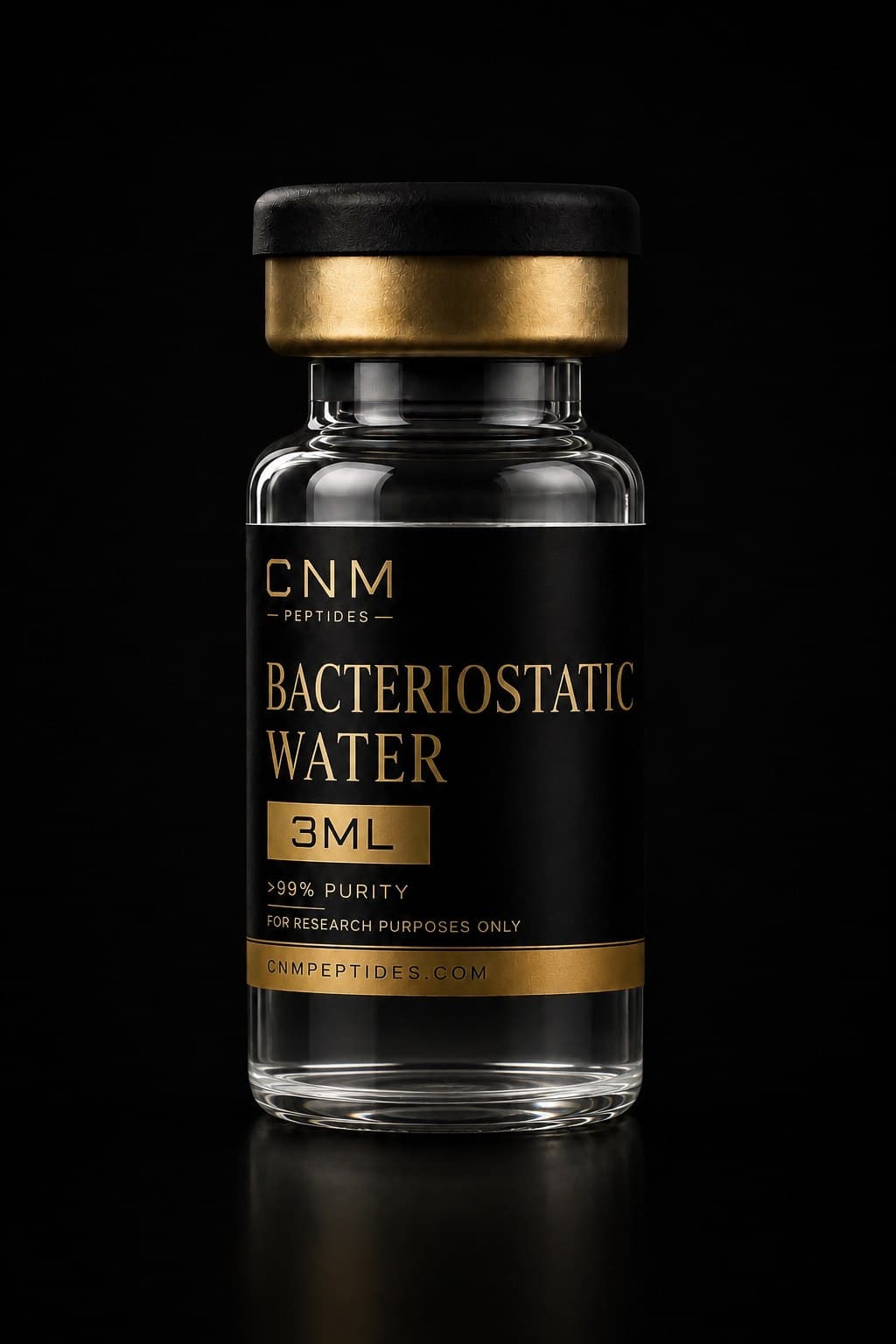
Ask about GHK-Cu →Peptides ship as a freeze-dried powder because they are far more stable that way. Reconstitution is adding bacteriostatic water to turn that powder into a measurable liquid. It matters because the ratio you choose determines what every subsequent dose actually contains — get the ratio wrong and every dose after it is wrong too. Our reconstitution kit includes a chart so you are not doing the arithmetic yourself.
Unopened lyophilised vials are stable at room temperature, away from light. Once reconstituted, refrigerate — and write the date on the vial, because you will not remember it. Do not freeze a reconstituted vial. Do not shake one; swirl it gently.
It depends on the compound. GLP-1 compounds change appetite within a week or two. Collagen-signalling peptides need six to ten weeks because new collagen has to physically be built. Recovery compounds usually show up around week three. Every product page on this site has its own timeline for exactly this reason.
No. Our products are sold as research compounds, which is why every vial is labelled for research use and why nothing on this site is presented as medical treatment. Deciding whether something is appropriate for you sits with you and whoever advises you.
You choose how to pay while you check out — Zelle, Cash App or Venmo — and the details appear the moment you place the order, along with your order number. No cards, and no card details are collected anywhere on this site. Put that order number in the payment note: it is the only thing linking your payment to your order. Every order is confirmed personally, and once a C.N.M Agent has seen the payment it moves to fulfilment with a tracking number.
Unopened, unused items in original packaging can be returned within 14 days of delivery. For safety reasons we cannot accept returns on anything that has been opened or reconstituted. If something arrives damaged or wrong, tell us and we will replace it.